Trump appears at the Supreme Court to defend plan that would change who can be a U.S. citizen







Posted on 04/02/26 at 12:53
- Trump defends birthright citizenship change plan
- He goes to the Supreme Court
- Key constitutional case
The battle over one of the most emblematic rights in the United States has entered a critical phase.
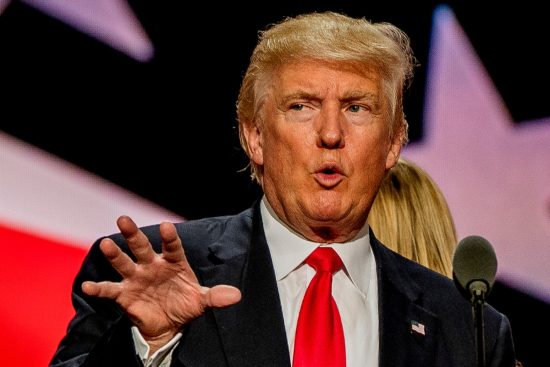
This Wednesday, President Donald Trump personally attended the Supreme Court, where the legality of his order to limit birthright citizenship is being debated—a measure that could change the future of thousands of migrant families.
- Why it matters: what is at stake is not just an immigration policy, but the interpretation of the Constitution and the scope of a right in place for more than a century.
Trump appears at the Supreme Court and raises political and legal tension
The scene was unusual: Trump arrived minutes before the hearing and sat in the front row to listen to the arguments surrounding his own policy.
It is the first time a sitting president attends a session of this kind.
The case is significant.
The Court had previously allowed the policy to move forward by lifting blocks from lower courts, but now it must rule on the core issue: whether the president can limit a constitutional right through an executive order.
While the attorney general defended the government’s position, Trump’s presence reinforced the political message of a measure that has been central to his anti-immigration agenda.
Response from civil groups: direct criticism and warnings
The US birthright citizenship case also triggered immediate reactions from civil rights organizations.
“If President Trump wishes to come to the Supreme Court to see how the ACLU teaches him a lesson about the meaning of the Constitution and birthright citizenship, we will gladly sit next to him in that same courtroom,” said Anthony D. Romero of the American Civil Liberties Union (ACLU).
Romero also emphasized the historical weight of the case:
“any attempt to divert attention from the seriousness and importance of this case will not succeed”
And assured that the Court:
“is up to the task of interpreting and defending the Constitution, even under the watchful eye of a sitting president.”
“This is one of the most important cases of the last hundred years,” he insisted.
What Trump proposes and why it directly affects migrants
When Donald Trump began his second presidency in January 2025, he signed an executive order to end birthright citizenship as part of his anti-immigration agenda.
This would mean that babies born in the United States to migrant parents would not be considered Americans, breaking a practice in place for generations.
The order specifically targets children of undocumented individuals or those with temporary status, such as student, work, or tourist visas.
According to Trump’s interpretation, this right should not automatically apply in those cases.
Additionally, the president has defended his position by arguing that the Fourteenth Amendment was created to protect the “children of slaves” and not for “those who take vacations to obtain citizenship.”
The Fourteenth Amendment: the heart of the constitutional debate

At the center of the birthright citizenship Supreme Court case is the Fourteenth Amendment, which establishes that every person born in the United States is a citizen.
This principle was reaffirmed by the Supreme Court since the 19th century and has served as the basis for key civil rights decisions.
However, Trump’s order created a direct clash with that historical interpretation, triggering multiple lawsuits and judicial blocks across different states.
Although lower courts have halted the measure, the Supreme Court must now decide whether this constitutional guarantee can be reinterpreted or limited.
The legal battle and what is at stake for thousands of families
Since its signing, the executive order has faced immediate legal challenges. Federal judges blocked its implementation while lawsuits progressed, keeping the measure on hold until now.
Even so, the potential impact is enormous. Each year, hundreds of thousands of children could be affected if the Court supports the president’s position.
Legal experts and human rights organizations have warned that allowing this change would open the door to a profound transformation of the immigration system and the very concept of citizenship in the country.
What’s next: a ruling that could redefine citizenship in the US
The Supreme Court will hear arguments and a decision is expected before the end of June.
The ruling will not only determine the future of Trump’s executive order, but also the scope of the Fourteenth Amendment in the 21st century.
For millions of migrant families, the outcome could be decisive: preserving a historic right or facing a new legal landscape that would change who can be considered American from birth.
You may also like: Congress pushes to resume suspended citizenship processes
Source: EFE / El País