New Florida Law Sparks Controversy Over Designation of Terrorist Groups







Posted on 03/14/26 at 19:21
- Florida Approves Controversial Terrorist Desgiantion Law
- Governor will be able to declare groups terrorists
- Criticism over freedom of expression
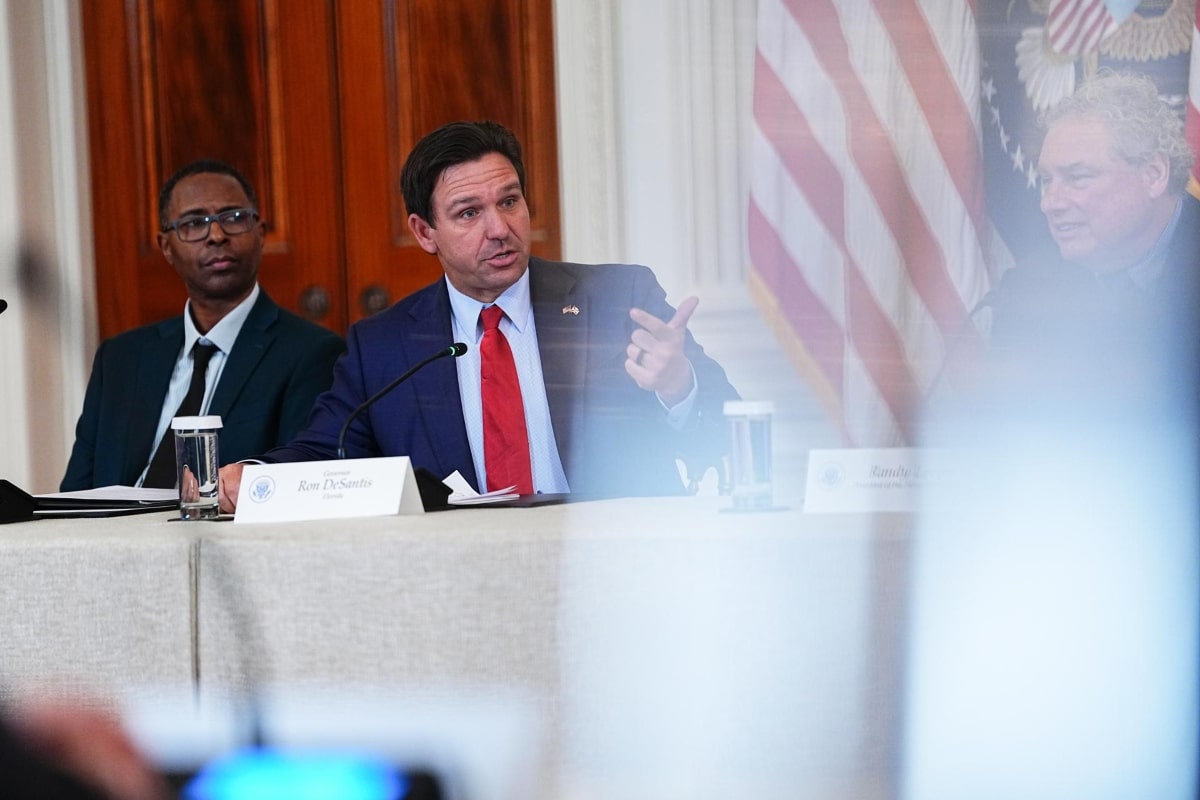
According to reports from EFE, the Congress of Florida approved a new law that will allow Governor Ron DeSantis to designate certain local groups as “domestic terrorist organizations.”
The Florida domestic terrorist designation law has raised concerns among immigrant advocates and defenders of free speech in the United States.
The initiative was approved Thursday by the Florida House of Representatives.
The vote ended with 80 votes in favor and 25 against.
The new rule also includes measures targeting students and educational institutions linked to organizations that the state government considers terrorist groups.
The bill will now go to the desk of Governor Ron DeSantis.
The proposal has sparked intense political and legal debate in the state.
Law Allows the Designation of Domestic Terrorist Organizations

The approved bill grants the Florida government the authority to designate certain groups as “domestic terrorist organizations.”
In addition, the Florida domestic terrorist designation law authorizes schools to expel students who “promote” or “support” those organizations.
It also allows private schools to be removed from the educational voucher program.
This program allows private educational institutions to receive public funds through what are known as school vouchers.
You may also be interested in: Blow to Trump: Congressman Leaves the Republican Party and Reveals His Plan
The measure expands the state government’s ability to take administrative action against organizations and schools it considers connected to designated groups.
The legislative debate took place amid sharp differences between Republican and Democratic lawmakers.
The final approval came with a large Republican majority in the state House.
Proposal Emerges After Court Blocks Executive Order

The new legislation follows a ruling by a federal judge who blocked a previous executive order issued by Governor Ron DeSantis.
That order attempted to designate the Council on American-Islamic Relations as a terrorist organization.
The group is the largest Muslim civil rights organization in the United States.
The judge ruled that the governor did not have the legal authority to make such a designation.
The measure had also not been adopted by the federal government.
The Florida domestic terrorist designation law aims to formally grant that authority to the state’s executive branch.
During the legislative debate, state representative Hillary Cassel defended the proposal.
Cassel is the sponsor of the initiative.
“The only people handing their children over to terrorism are those who are going to vote ‘no’ on this initiative,” the lawmaker said at the beginning of the debate.
Civil Rights Groups Warn of Risks to Freedoms
Republicans supporting the bill argued that some groups and Muslim schools are attempting to impose Sharia law.
They also referenced organizations such as the Council on American-Islamic Relations.
However, no evidence was presented during the legislative debate.
Similar arguments have been raised by Republican lawmakers in other states, including Texas.
In contrast, Democratic lawmakers and civil rights organizations have expressed concern about the scope of the Florida domestic terrorist designation law.
The Florida Immigrant Coalition (FLIC) and the American Civil Liberties Union warned about possible abuses in the law’s application.
Both organizations argue that the language of the legislation is too broad and open to interpretation.
According to these groups, the law could potentially target organizations that criticize the state government.
FLIC stated that the law could affect organizations that provide social assistance, including groups that support immigrants, help survivors of violence, or offer shelter to people in need.
The organization warned that the legislation could criminalize community assistance activities.
For its part, the ACLU said the law conflicts with the First Amendment of the U.S. Constitution, which protects freedom of speech.
According to the ACLU, the proposal is based on the principle of “guilty by designation.”
The organization warned that this mechanism could be used against critics of the state government.
The debate continues while the law awaits the final decision of Governor Ron DeSantis.