What Will Happen to the $2,000 Checks Trump Promised? What You Need to Know







Posted on 03/04/26 at 19:36
The promise of sending $2,000 Trump stimulus checks funded with tariff revenue remains uncertain.
Although President Donald Trump said he was considering distributing a “dividend” to most Americans, the recent Supreme Court decision and the broader fiscal outlook have raised doubts about whether those payments will actually happen, according to an analysis by The Center Square.
Why it matters: Millions of consumers faced price increases linked to tariffs.
The possibility of a direct refund has generated expectations, but also uncertainty about its legal and budgetary feasibility.
Supreme Court Changes the Outlook for $2,000 Trump Stimulus Checks
In February, the Supreme Court invalidated tariffs imposed under the International Emergency Economic Powers Act of 1977.
- Following that ruling, Trump relied on another legal basis to maintain a 10% global tariff on imports, with some exceptions.
- Importers paid those taxes to the federal government, and more than 900 have already filed lawsuits seeking to recover the money.
- However, consumers do not automatically have the right to a direct refund, even though they absorbed part of the cost through higher prices.
The Penn Wharton Budget Model projected that the judicial decision could generate up to $175 billion in refunds.
Meanwhile, U.S. Customs and Border Protection reported that it assessed $253.3 billion in tariffs, taxes, and fees since January 20, 2025.
A social media clip captured an exchange about the proposed $2,000 Trump stimulus checks:
Reporter: “What about the $2,000 checks you promised?”
Trump: “I’m considering it very seriously.”
Reporter: “But can you promise some Americans will receive those checks?”
Trump: “Yes, of course. I can do it. I haven’t committed yet, but maybe…” pic.twitter.com/SrTNklNx4R— CryptoWhale™ (@SCryptowhale) February 14, 2026
La promesa del dividendo de 2.000 dólares
The Promise of a $2,000 Dividend
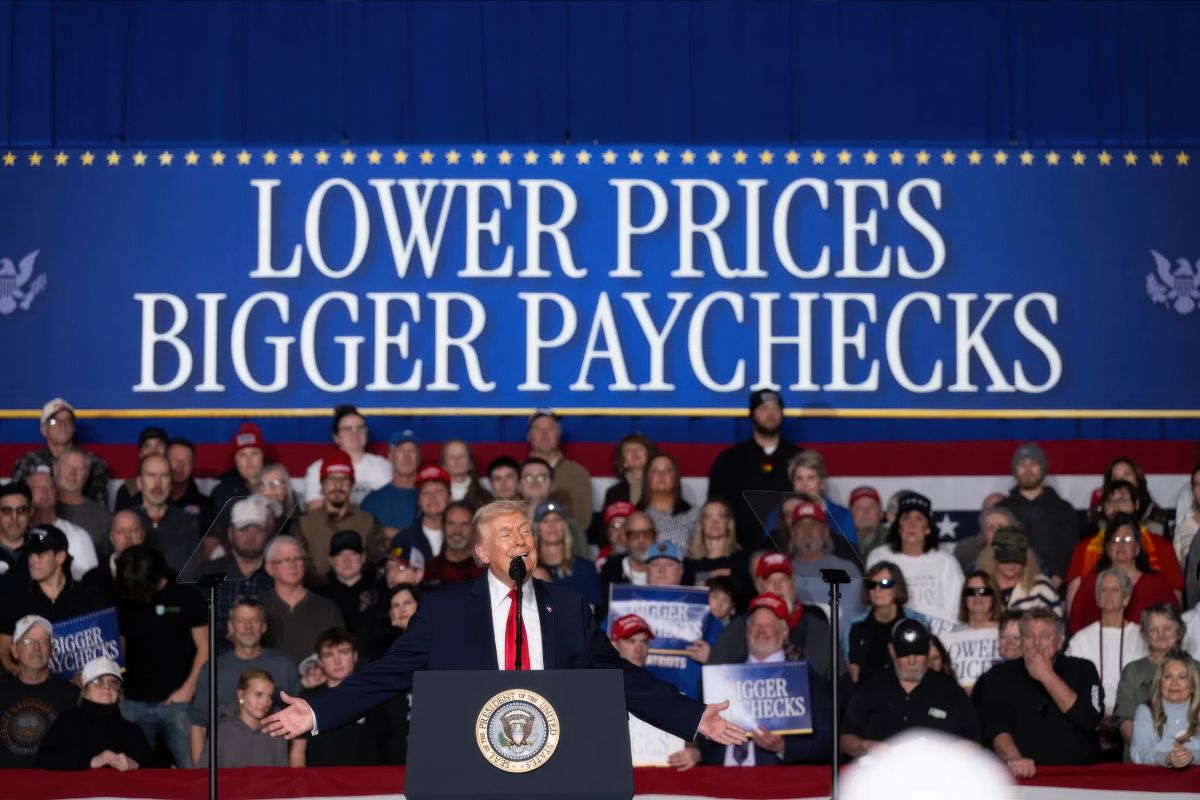
Trump first floated the idea in July of distributing direct payments financed with tariff revenue.
In November, he wrote that a dividend of at least $2,000 per person would be paid, excluding higher-income earners.
Later, Republican Senator Josh Hawley introduced the American Worker Rebate Act of 2025, which proposes a stimulus check funded by those revenues.
The bill was referred to the Senate Finance Committee, where it remains under review.

In January, the president said the checks could arrive toward the end of the year. However, after the February 20 court ruling, he has not spoken publicly again about the issue.
A campaign email sent on February 27 stated that the proposal is still “being seriously considered,” although without a definitive commitment.
The White House did not respond to inquiries about refund plans following the Supreme Court’s 6–3 decision.
Who Could Receive Refunds?
So far, the only parties with formal claims are importers.
Companies such as FedEx have already filed lawsuits requesting reimbursements.
The company said that if it receives refunds, it intends to pass them on to carriers and consumers who absorbed the costs. However, the process would depend on future government and judicial guidelines.
In Congress, Democratic Representative Jasmine Crockett introduced a Rebate Act that would require the Treasury Department to design a transparent formula for sending payments to consumers.
However, Treasury Secretary Scott Bessent expressed doubts that the public will ultimately see that money.

The Real Impact of Trump Tariffs on Your Wallet
Although companies initially absorbed much of the cost of tariffs, they passed a portion on to consumers.
- A study by the Pricing Lab at Harvard Business School estimated that consumers covered about one quarter of those costs through price increases.
- The Tax Foundation calculated that tariffs increased the average U.S. household’s tax burden by about $1,000 last year.
Additionally, fiscal watchdog organizations have warned that tariff revenue would not be sufficient to fund other promises linked to the proposal, such as replacing income taxes, financing increases in military spending, or reducing the federal debt of $38.7 trillion.
You may also be interested in: States That Could Receive the Highest Tax Refunds This Year
What Comes Next
For now, there is no official timeline or approved mechanism to distribute the $2,000 Trump stimulus checks.
The legislative proposal remains in committee, and the White House has not provided additional details following the court ruling.
As importer lawsuits continue and debate in Congress moves forward, consumers still have no clear guarantee that they will receive a refund.
The promise remains part of the political discussion, but whether it becomes reality will depend on legal and legislative decisions that have yet to be made.