Trump Blocks Key Oil Route: Strategy or Major Mistake with Global Economic Impact?







Posted on 04/15/26 at 20:40
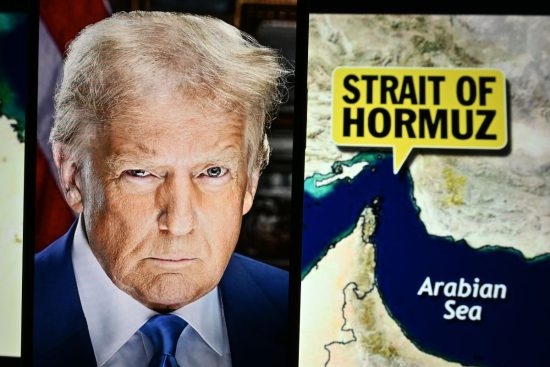
President Donald Trump ordered a naval blockade in the Strait of Hormuz, one of the world’s most critical oil routes.
The measure went into effect Monday at 10:00 a.m. (Eastern Time), according to CENTCOM. However, it has already triggered a sharp rise in crude oil prices, reigniting fears of an economic crisis with direct impact on the United States.
- Why it matters: The International Monetary Fund warned that the global economy faces a “major test” and that the conflict could lead to an unprecedented energy crisis with the risk of a global recession tied to the Strait of Hormuz blockade impact.
The oil surge after the blockade
Markets reacted immediately to the announcement.
- Brent surpassed $104 per barrel on Monday 04/13
- WTI rose more than 7%
- Oil tankers halted operations
Traffic in the strait, which had begun recovering after a recent ceasefire, stalled again within hours. At least two vessels changed course, reflecting fears of prolonged disruption.
Key point: the market doesn’t wait for oil shortages—it reacts to risk. That anticipation is what drives prices up quickly, a central feature of the Strait of Hormuz blockade impact.

IMF warns of unprecedented energy crisis
The International Monetary Fund raised global concern and quantified the impact.
- Oil flow dropped 13%
- Liquefied natural gas fell 20%
- Global energy disruption
The organization describes the situation as a “large, global, and asymmetric” supply shock.
This means:
- It is large: significantly reduces available energy
- It is global: all countries face higher prices
- It is asymmetric: some countries will suffer more than others
Critical point: when energy is scarce, the entire economy slows down. The IMF warns this shock could push the world into recession if the conflict continues, amplifying the Strait of Hormuz blockade impact.
Less energy, more pressure on the global economy
The impact goes beyond oil.
When energy prices rise:
- Production costs increase
- Transportation becomes more expensive
- Consumer prices go up
Additionally, disruption in a strategic route like the Strait of Hormuz affects global trade. Shipping delays, longer routes, and higher logistics costs ultimately translate into higher prices for consumers.
In simple terms: everything that moves, produces, or ships depends on energy. That’s why the impact is widespread.

Gas prices in the U.S.: direct and rapid impact
Even though the U.S. produces oil, prices are determined globally.
That means when crude rises:
- Gasoline prices increase at stations
- Transportation costs go up
- Distribution of goods becomes more expensive
This effect is usually felt within days or weeks—not months—making the Strait of Hormuz blockade impact especially immediate for consumers.
Concrete impact:
- Filling your tank will cost more
- Delivery and logistics costs rise
- Grocery prices increase
Who will feel the impact most in the U.S.?
The effect will not be equal, and some groups will face greater economic pressure.
- Low-income households will be the most vulnerable, as they spend a larger portion of their budget on fuel, food, and utilities. Sustained increases may force them to cut essential expenses.
- Workers who rely on cars—such as delivery drivers, commuters, and gig workers—will see daily costs rise without necessarily increasing income.
- Small businesses, especially in transportation, construction, restaurants, and retail, will face higher operating costs. This may lead to higher prices or reduced profitability.
Overall, all consumers will feel the impact through higher inflation, making everyday life more expensive due to the Strait of Hormuz blockade.
How to reduce the impact on your budget
In a scenario of higher gas prices and inflation, adjusting financial habits can make a real difference in the short term.

- Reduce fuel consumption: Avoid unnecessary trips, combine errands, and carpool to lower weekly gas expenses.
- Optimize household energy use: Adjust air conditioning, heating, and appliance use to control rising utility bills.
- Reorganize your budget: Prioritize housing, food, and transportation. Cutting non-essential expenses can free up cash.
- Shop strategically: Compare prices, use discounts, and choose more affordable brands.
- Anticipate price increases: Buying essentials early may help avoid higher costs later.
Key point: fuel and transportation costs are usually the first to reflect these crises, so acting early can reduce the financial impact.
The background: failed negotiations and escalation
The blockade follows the collapse of more than 20 hours of negotiations between the United States and Iran, with no agreement on the nuclear program or control of the route.
The measure aims to pressure Iran to return to negotiations, but it also increases the risk of escalation in the region.
This context adds uncertainty about how long the blockade will last and how deep its effects will be.
You may also like: Iran Proposes 5-Year Nuclear Pause to the U.S. Amid Rising Tensions, According to The New York Times
What’s next: risk of deeper crisis
The situation remains fluid and depends on how the conflict evolves.
- If the Strait of Hormuz blockade continues, pressure on oil prices will increase
- Energy costs could keep rising
- The risk of economic slowdown will grow
The IMF warns that this crisis is testing global resilience. If prolonged, the impact could extend beyond energy and affect economic growth worldwide.
What began as a geopolitical decision is quickly becoming a global economic issue—one that could directly affect millions of households in the United States.