Green Card: Legal Reasons That Can Prevent You From Obtaining Permanent Residency







Posted on 03/16/26 at 13:42
- Common reasons for Green Card rejection
- Mistakes that cause inadmissibility
- Legal rules for permanent residency
Obtaining a Green Card is one of the most important goals for many immigrants living in the United States. However, the process can be complex.
Errors, omissions, or prior immigration and legal issues can lead to delays—or even a permanent denial of residency.
Immigration authorities carefully review every case. Each application must meet the requirements established by U.S. immigration law.
For this reason, understanding Green Card inadmissibility reasons is essential before starting the process.
Green Card Inadmissibility Reasons You Should Know

Understanding the most common mistakes can help applicants prepare their case more effectively and increase the chances of approval.
Many denials occur for the same recurring reasons.
Several of these grounds are outlined in United States Code §1182.
Below are some of the most common factors that can prevent someone from obtaining permanent residency.
What Does It Mean to Be Considered a “Public Charge”?
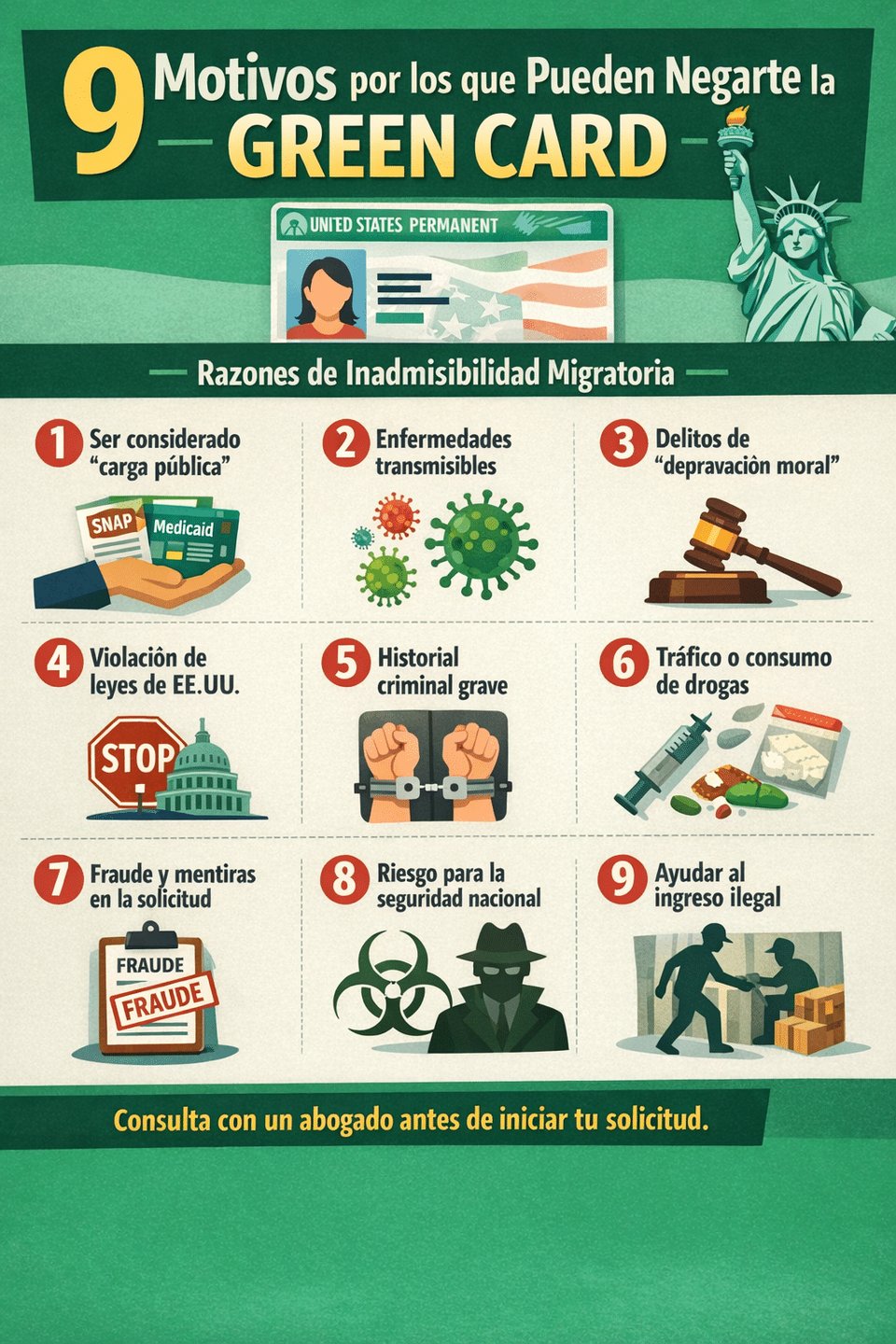
One of the most common Green Card inadmissibility reasons is being classified as a public charge.
This happens when authorities determine that a person may depend on public assistance.
The evaluation includes benefits received before or during the immigration process.
You may also like: ICE and FBI Arrest 10 in Alleged U Visa Fraud Scheme
Programs that may be considered include Medicaid, Supplemental Nutrition Assistance Program, and housing subsidies.
If authorities determine that the Green Card applicant depends on these programs, the application may be denied.
This rule is intended to evaluate whether the person will be able to support themselves financially in the country, according to Gestion.
Each case is reviewed individually by immigration authorities.
Health Issues and Criminal Background
Another factor involves public health considerations.
Authorities may declare applicants inadmissible if they have communicable diseases considered significant to public health.
Examples include active tuberculosis, syphilis, or gonorrhea.
Criminal history can also affect eligibility for permanent residency.
Crimes involving what immigration law defines as “moral turpitude” may result in a denial.
These acts refer to conduct that violates fundamental social values.
The law includes some exceptions if the offense occurred before the age of 18.
Criminal history is also reviewed strictly in Green Card applications.
Immigration law states that two or more criminal convictions may lead to inadmissibility.
The same may apply if the total period of imprisonment exceeds five years.
Each case is analyzed individually by immigration authorities.
Green Card Fraud, National Security, and Other Causes
Fraud in an immigration application is another common reason for rejection.
Authorities may deny a Green Card if false information or altered documents are detected.
This may also occur if an applicant hides relevant information during the process.
Marriage fraud or identity misrepresentation can also lead to inadmissibility.
Another serious reason involves participation in drug trafficking.
This includes acting as an accomplice or facilitator in activities related to illegal narcotics.
Addiction to illegal substances may also be considered.
Authorities also evaluate potential national security risks.
Permanent residency may be denied if a person has links to espionage, terrorism, or sabotage.
The rule can also apply to individuals associated with nuclear, biological, or chemical weapons activities.
Immigration law includes another common ground for denial.
Helping or facilitating the illegal entry of another person into the United States may prevent someone from obtaining permanent residency.
Each application is reviewed according to these criteria.
Because the immigration process is complex, many specialists recommend carefully preparing documentation before starting the application to avoid the most common Green Card inadmissibility reasons.